
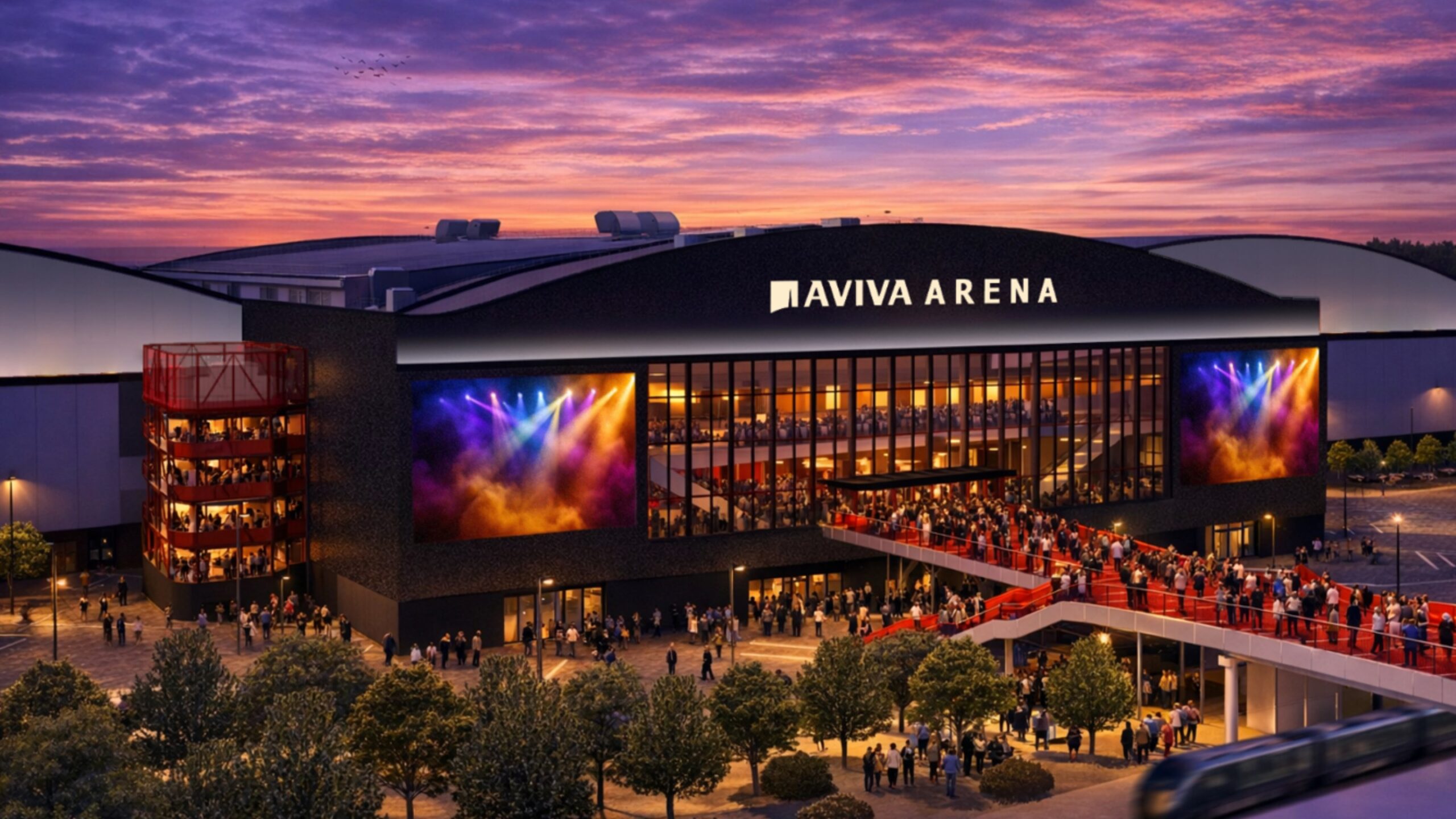
Sponsorships of major venues are commonly framed as straightforward brand‑building exercises.
They promise high visibility, positive associations, and a long runway for community engagement.
For insurers, the timing is no accident. With the market softening after several years of hard‑market conditions, many insurance brands are doubling down on visibility and differentiation.
When pricing power weakens, brand strength becomes a competitive lever. It is one way to maintain customer loyalty, attract new segments, and signal long‑term stability.
Aviva’s newly announced sponsorship of the North Bristol arena, which will now be known as the “Aviva Arena”, fits squarely into that strategy.
It aligns the insurer with a landmark cultural project and echoes its successful naming partnership in Manchester, where Aviva Studios has been applauded for its arts‑led regeneration. It is a success story.
But for brands, place‑based sponsorships are never just about the building. They’re about the politics, the people, and the lived realities of the communities who will interact with that building every day. And in Bristol, that context is unusually charged.
I should know, it’s where I’m from. Many of my friends still live there and the arena remains a subject of hot debate.
The arena’s relocation from Temple Meads to Filton remains one of the city’s most contentious planning decisions of the past decade.
What was once envisioned as a centrally located, rail‑connected cultural hub has instead become a 20,000‑capacity venue on a site already notorious for congestion. Not exactly aligned with Aviva’s reputation for environmentally-conscious, long-term decisions.
For locals in Stoke Gifford, Patchway and Bradley Stoke, traffic isn’t an abstract concern, it’s a daily frustration. Adding 1.4 million visitors a year to an area with limited public transport is, understandably, a flashpoint.
This is where brand and PR alignment will be key. Potentially for Aviva, it faces reputational risk.
When a sponsor’s name becomes the name of the venue, it also becomes the shorthand for every gripe associated with it.
Traffic jams, parking chaos, late‑night noise, pressure on local services…. whether fair or not, these issues can easily become “Aviva problems” in the public imagination.
And with the arena’s long history of delays, shifting plans and political wrangling, the brand is stepping into a narrative that predates it and isn’t entirely within its control.
However, this is also where Aviva has a terrific opportunity on Bristol.
Its Manchester partnership has shown it can support cultural institutions with credibility and community sensitivity.
If it brings that same approach to Bristol, investing in transport solutions, supporting local engagement, and being visibly present in conversations about infrastructure, it can turn a reputational risk into a reputational asset. I really hope it does. Aviva has a substantial workforce in Bristol and this can work in its favour.
More broadly. for sponsorship and brand‑marketing professionals, the lesson is clear: visibility cuts both ways.
When you put your name on a building, you inherit its story, the triumphs and the tensions.
I shall be watching on with significant personal interest. I hope Aviva delivers, not just for its commercial stakeholders, but also for Bristol…. and South Gloucestershire.
Joe McGrath is the founder and CEO of Rhotic Media