
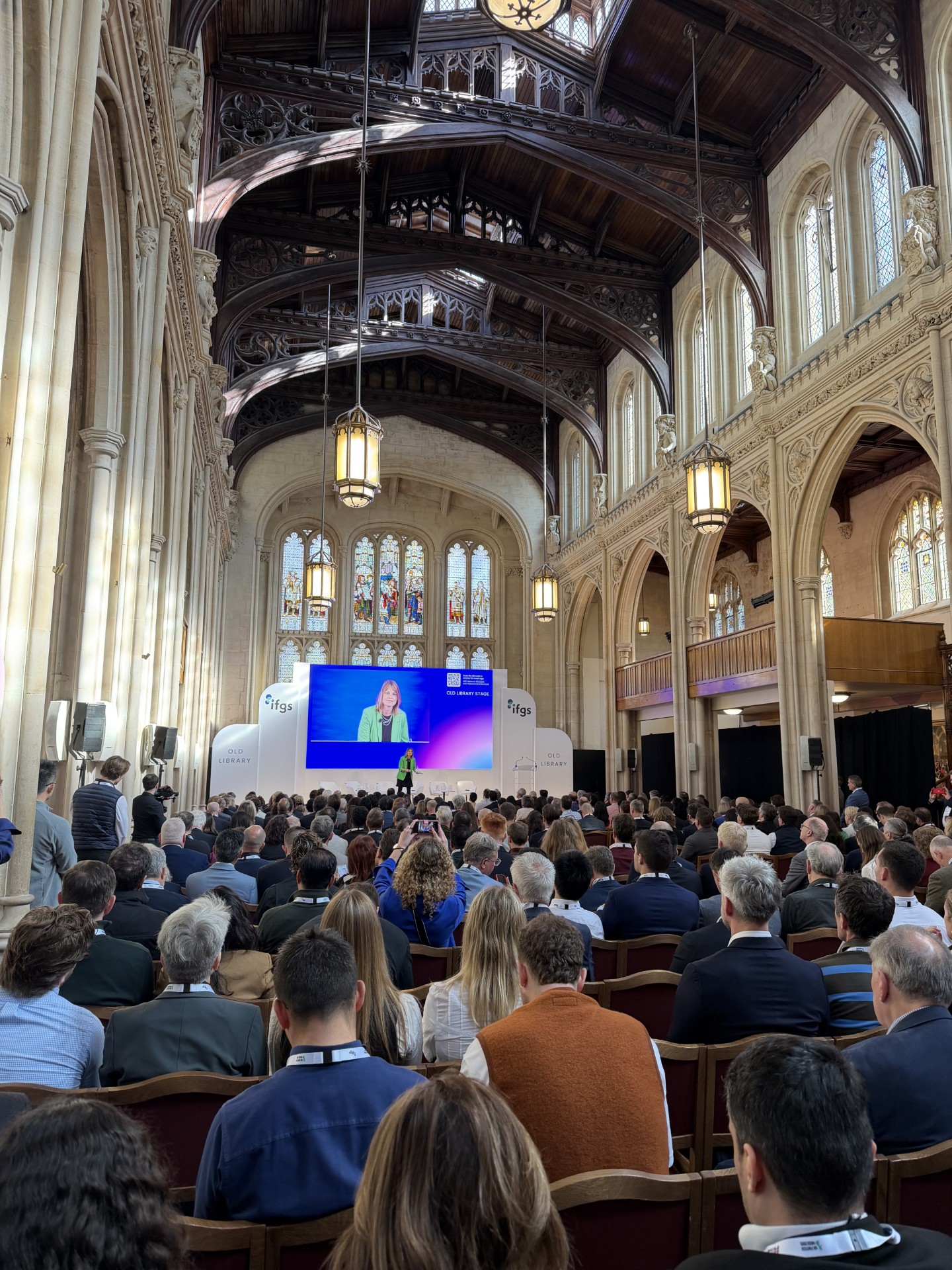
As fintech accelerates and becomes more complex, marketing has become the frontline for building understanding, trust and sustainable growth.
That dynamic was evident throughout the Innovative Finance Summit 2026, where conversations on stage and across the exhibition floor reflected broad confidence in emerging capabilities including AI, alongside ongoing questions about how policy, innovation and ambition translate into commercial clarity, customer understanding and scalable delivery.
That sentiment was echoed by Richard Davies, CEO of Allica Bank, who noted that conversation has moved on from working out what’s possible but rather how it fits into day-to-day business, and said, “We are beyond the point of doubting AI’s capabilities.”
This optimism was reinforced by government voices on stage, who consistently framed fintech as the next stage of innovation, a narrative that sets expectations across the market.
“We have built success because we have embraced innovation, fintech is the next wave of innovation,” said Lucy Rigby MP, the UK’s economic secretary to the Treasury.
Regulatory voices struck a pragmatic note, recognising that while innovation can move quickly, scaling brings added scrutiny. The quality of underlying data, governance and consistent interpretation all play a role in shaping how fast firms can act, and how clearly they can position themselves in the market.
For marketers, however, that shift from confidence to application brings immediate pressure.
Away from the main stage, conversations on exhibition stands told a more practical story.
Start-up fintech firms repeatedly highlighted the importance of how products and services are communicated to cut through an increasingly saturated market. As propositions become more sophisticated, marketers are under growing pressure to articulate these propositions with clarity and confidence, even as the wider fintech landscape becomes more congested and harder to differentiate within.
Several firms also pointed to growing pressure to shorten sales cycles and accelerate onboarding, noting that lengthy explanations and complexity increasingly risk slowing momentum or stalling deals altogether.
As confidence in new capabilities has been established, attention has turned inward, with firms rethinking how their organisations are structured, skilled and aligned well enough to make effective use of them.
The importance of humans was a key talking point for panels throughout the day, with the conversations gearing towards making sure people have the skills they need to use these new technologies, instead of fundamentally changing how those roles operate.
That perspective was captured by Jonas Twitchen, group Innovation lead at Lloyds Banking Group: “It’s about trusting in our workforce and unleashing people to be productive.”
Taken together, IFGS 2026 revealed a sector confident in its direction, aligned at the top and pragmatic on the ground. As ambition, regulation and innovation continue to converge, marketing is increasingly where those forces are translated into understanding, trust and sustainable growth.