
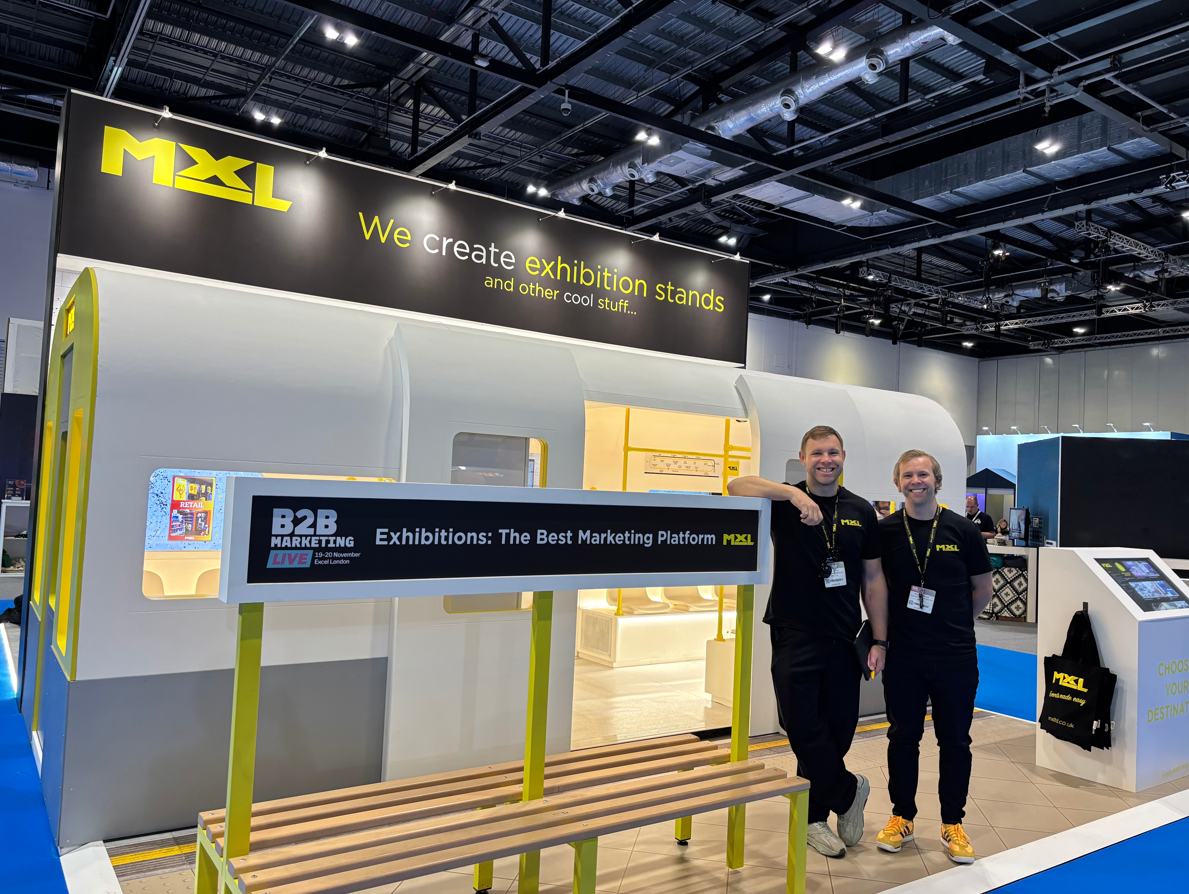
Much like vinyl’s resurgence in the age of streaming, the continued acceleration of digital life has sharpened people’s appetite for real-world connection.
Events have always had a place in the marketer’s toolkit, neatly marked out in calendars and budgets. But their role is shifting. They are no longer just a channel for visibility; they are a space where brands are expected to create meaningful, human experiences.
The challenge is that this shift is widely understood. Every attendee arrives looking for genuine interaction, while every exhibitor is trying to provide it. Standing out in that environment – and doing so cost-effectively – is becoming increasingly difficult.
Richard Moule, sales and marketing director at MxL Ltd, an events specialist delivering custom exhibition stands and full-scale builds across the UK and Europe, sees these pressures play out regularly. He understands both the pitfalls marketers face on the exhibition floor and the practical steps that can elevate a brand’s presence.

For many, particularly first-time exhibitors, the process can feel daunting given the level of investment involved. That’s why Moule stresses the importance of early, detailed conversations before any formal brief is set.
“A common issue is not having a clear focus. It’s important to know exactly why you’re exhibiting — are you showcasing a product, selling on the day, meeting new clients or building brand awareness? That objective should guide everything,” he says.
Clarity of purpose, he argues, is what allows marketing objectives to translate effectively into physical space. It starts with defining what success looks like for the organisation at a given event and building the stand around that goal.
“If the focus is on the product, we create areas that display it front and centre. If it’s about conversations, we build in comfortable spaces to meet and talk. If it’s brand awareness, we make sure the stand is bold, visible and easy to understand at a glance,” he explains.
The power of stand design
The actual design of the stand itself, unsurprisingly, plays an important role. Moule emphasises that in a crowded exhibition hall, success often comes down to how quickly and confidently a brand can communicate who it is and why it matters.
That starts with simplicity. Bold, easy-to-read graphics are essential, ensuring attendees can understand what a company does within seconds rather than having to work it out.
It also extends to how the space is used. Maximising height, incorporating hanging banners, and designing with visibility in mind all help reinforce that presence and boost visibility.
“Keep it clear, make it visible and give people a reason to engage,” he says.
Design also plays a central role in maintaining consistency between a brand’s digital identity and its physical presence. Moule explains that MxL builds stands by extending what already exists, using established fonts, colours, imagery and visual cues to create an environment that feels instantly recognisable.
“It’s not about coming up with something new,” Moule says. “It’s about translating those existing ideas into a physical environment and sticking closely to brand guidelines, so everything stays consistent and recognisable.”
From visual appeal to visitor engagement
But Moule stresses that design alone isn’t enough. To truly stand out, brands need to create a memorable experience that gives attendees something to take away.
For him, the difference between a stand that simply looks good and one that genuinely engages people comes down to offering a clear reason to stop and participate.
That might be a live product demonstration, an interactive activity, refreshments or even well-chosen branded merchandise.
Just as important, he adds, is creating space for meaningful conversation.
“Seating areas give people a chance to slow down, have more in-depth discussions, and build relationships, rather than just quick chats on their feet,” he says.
Thinking past the exhibition floor
While design and experience play a key role in drawing attendees to a stand, Moule says footfall is only part of the equation. The real measure of success comes after the event.
“What really matters is the number of leads, the quality of those leads and the cost per lead,” he says. “Any orders or business secured directly at the show are also a clear indicator of success.”
He adds that it’s important not to expect immediate returns across the board. In many sectors, the impact of an event may take months, or even years, to fully materialise.
For that reason, MxL works with clients to think beyond the stand itself, considering how it connects to pre-show activity and how it feeds into post-event follow-up.
“It’s important to make the space work as part of a bigger plan, not just for the few days on site,” he says.
The execution of exhibition
Alongside strategy, Moule says one of the most common challenges exhibitors face is practical execution, particularly when it comes to logistics and budget. Even with clear objectives and strong creative direction in place, it’s easy to overcomplicate the stand itself.
He often sees brands trying to fit too much into a limited space, or overlooking the fundamentals such as storage, seating and day-to-day functionality.
That’s why MxL begins with the basics, starting with the venue and stand location, as these factors set the parameters for what’s realistically achievable.
“From there, it’s about getting the essentials right. Things like storage, seating, lighting, AV, team space and accessibility all need to work properly,” he says.
“If you’re bringing promotional materials, where do they go? How are they stored? Where is the team positioned? These details make a big difference on the day.”
Budget is another area where challenges can arise, with Moule noting that exhibitors often try to stretch resources too thin, which can create issues later in the process. Finding the right balance is key to ensuring the stand performs as intended.
One approach is to think longer term. Rather than treating each exhibition as a standalone build, MxL encourages clients to invest in stands that can be adapted and reused across multiple events.
“Building from our extensive collection of stock components helps keep costs under control and reduces waste,” he says. “Even with a tighter budget, you can still create a strong, effective stand — it’s about using the space in the right way.”
Ultimately, clear objectives, thoughtful design, meaningful engagement and practical delivery all need to work in tandem. When they do, exhibitions become more than just a few days on a calendar and instead become a connected part of a wider marketing strategy that delivers value before, during and long after the event itself.