
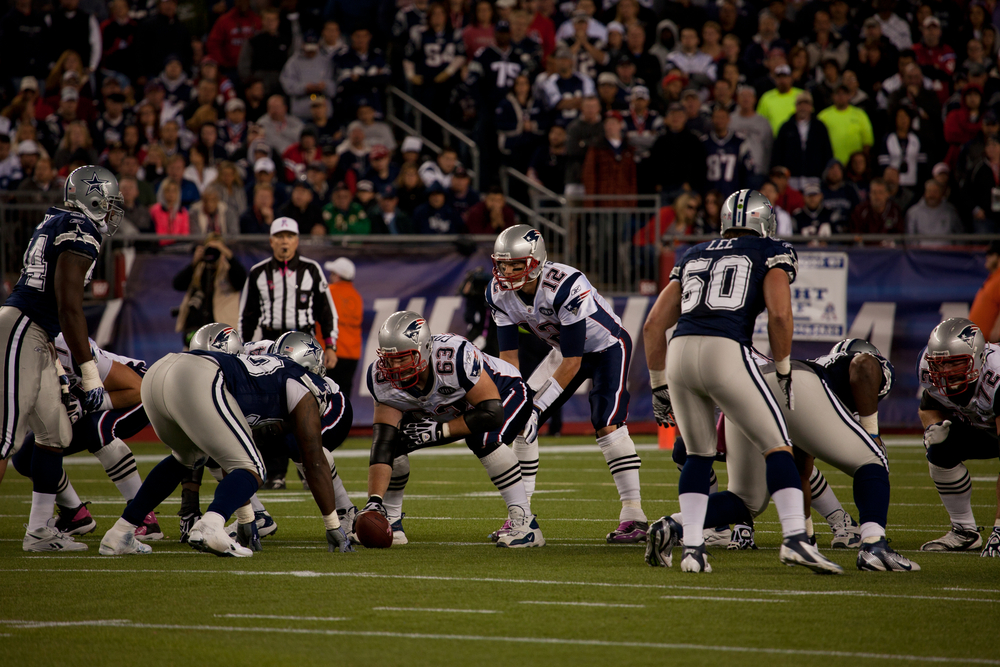
The Super Bowl has become far more than a fixture in the US sporting calendar. While American football remains at its core, the event now commands a global audience, with viewers around the world staying up into the early hours to watch.
This year’s matchup between the Seattle Seahawks and New England Patriots on Sunday 7 February has already generated huge buzz. However, crucially, many of viewers will not be tuning in for the game alone.
The half-time show, which is led by Bad Bunny this year, and the commercials have become attractions in their own right. Super Bowl advertising is now treated as premium entertainment: celebrity-led, culturally sharp and designed to cut through far beyond the live broadcast.
That reach is substantial. Last year’s Super Bowl averaged a record 127.7 million US viewers across television and streaming platforms, marking the second consecutive year of record audiences and underlining the event’s unrivalled scale.
However, visibility comes at a significant cost. In 2026, advertisers are expected to pay an average of $8 million for a single 30-second slot during the broadcast.
For financial services firms weighing up brand impact against budget reality, the question is unavoidable: does Super Bowl advertising justify its price tag, or is the exposure simply too expensive to rationalise?
This year’s advertisers
Despite the high cost of entry, a number of financial services firms are once again advertising during the Super Bowl, leaning heavily on celebrity talent and humour.
- Ramp
Fintech firm Ramp is heading to the Super Bowl with a 30-second spot starring Brian Baumgartner, best known for his role as Kevin in The Officer. In the advert, he reprises his role as “America’s favourite accountant,” only this time multiplied.
Titled ‘Multiply What’s Possible’, the advert shows Baumgartner drowning under an ever-growing mountain of receipts as a finance meeting looms.
Relief comes in the form of Ramp, which appears as an army of Baumgartner lookalikes, streamlining the chaos and sending productivity through the roof. The campaign leans into humour and familiarity to position Ramp as the ultimate fix for inefficient finance workflows.
- TurboTax
TurboTax has released a full two-minute version of its Super Bowl LX advert starring Adrien Brody, with a 45-second cut set to air during the game.
The commercial sees Brody preparing for his role as a TurboTax expert, only to be baffled by how effortlessly the platform removes the stress and drama from tax filing.
Blending cinematic flair with comedy, the advert reinforces TurboTax’s core message that tax season doesn’t have to be painful when the process is made simple.
- State Farm
State Farm’s Super Bowl advert parodies Bon Jovi’s “Livin’ on a Prayer” to highlight the risks of settling for inadequate insurance.
Titled ‘Stop Livin’ on a Prayer’, the campaign stars Hailee Steinfeld as a customer dealing with the frustrations of the fictional ‘Halfway There Insurance’” where confusing policies and poor service – played for laughs by Keegan-Michael Key and Danny McBride – fall short.
As the chaos builds, the contrast positions State Farm as the more dependable, customer-focused choice. Featuring a cameo from KATSEYE, the advert uses humour and a culturally iconic track to prompt viewers to reconsider whether their coverage truly meets their needs.
Avoiding a “30-second sugar rush”
The effectiveness of Super Bowl advertising remains a point of contention, particularly as costs continue to climb. Many argue that while the event delivers unparalleled visibility, the line between brand impact and brand vanity is increasingly blurred.
Charlie Terry, founder of UK-based omnichannel marketing agency CEEK, questions whether the investment delivers meaningful returns, suggesting brands are paying millions of dollars for “bragging rights” rather than performance.
“Brands paying $10 million for 30 seconds of ‘communal experience’ should be asking one question: where’s the attribution model? What are the returns? Advertising at Super Bowl isn’t dying, but for how long can it last without some viable proof points and logic? Wide audience reach doesn’t mean results,” he says.
“At these prices, CFOs aren’t buying performance, they are ultimately buying a seat at the same table as the handful of brands who can treat eight figures as a vanity metric.”
Terry argues the budget would be more effective if deployed across multiple channels — including streaming, creator and influencer partnerships and always-on digital — to build sustained visibility rather than what he describes as a “30-second sugar rush.”
“2026 might be the year we admit the Super Bowl ad slot is the most expensive brand awareness exercise still masquerading as performance marketing,” he adds.
Others, however, say the issue is not the Super Bowl itself, but how brands approach it.
Paola Nannelli, CEO of Pulse Advertising, says success is no longer about simply securing an expensive slot, but about how well campaigns tap into the wider cultural moment surrounding the event.
“The old playbook was: make a great ad, buy the slot, hope it goes viral. The new playbook is: build community first, co-create with them, then use the Super Bowl as the climax of a multi-week story,” she says.
“The brands that will win aren’t those with the biggest production budgets – they’re the ones who understand that in 2026, cultural credibility comes from community, not just celebrity.”
That shift reflects the broader evolution of the Super Bowl into a cultural and commercial moment, where creators, conversation and social engagement now matter as much as the broadcast itself.
“The Super Bowl is no longer just a broadcast moment, it’s a social-first cultural platform. The smartest campaigns this year aren’t just featuring influencers – they’re leveraging their creative language. Teasers like Bad Bunny’s show how brands and talent now use social to extend the event beyond the game, turning seconds of airtime into weeks of conversation and global relevance,” she says.
For firms like Ramp, TurboTax and State Farm, the approach highlights how financial brands can make the most of the Super Bowl by combining humour, celebrity and cultural moments to create campaigns that resonate far beyond the broadcast.
In that sense, the debate over whether Super Bowl advertising is “worth it” isn’t just about dollars spent, it’s about how strategically brands can turn fleeting airtime into enduring engagement.