
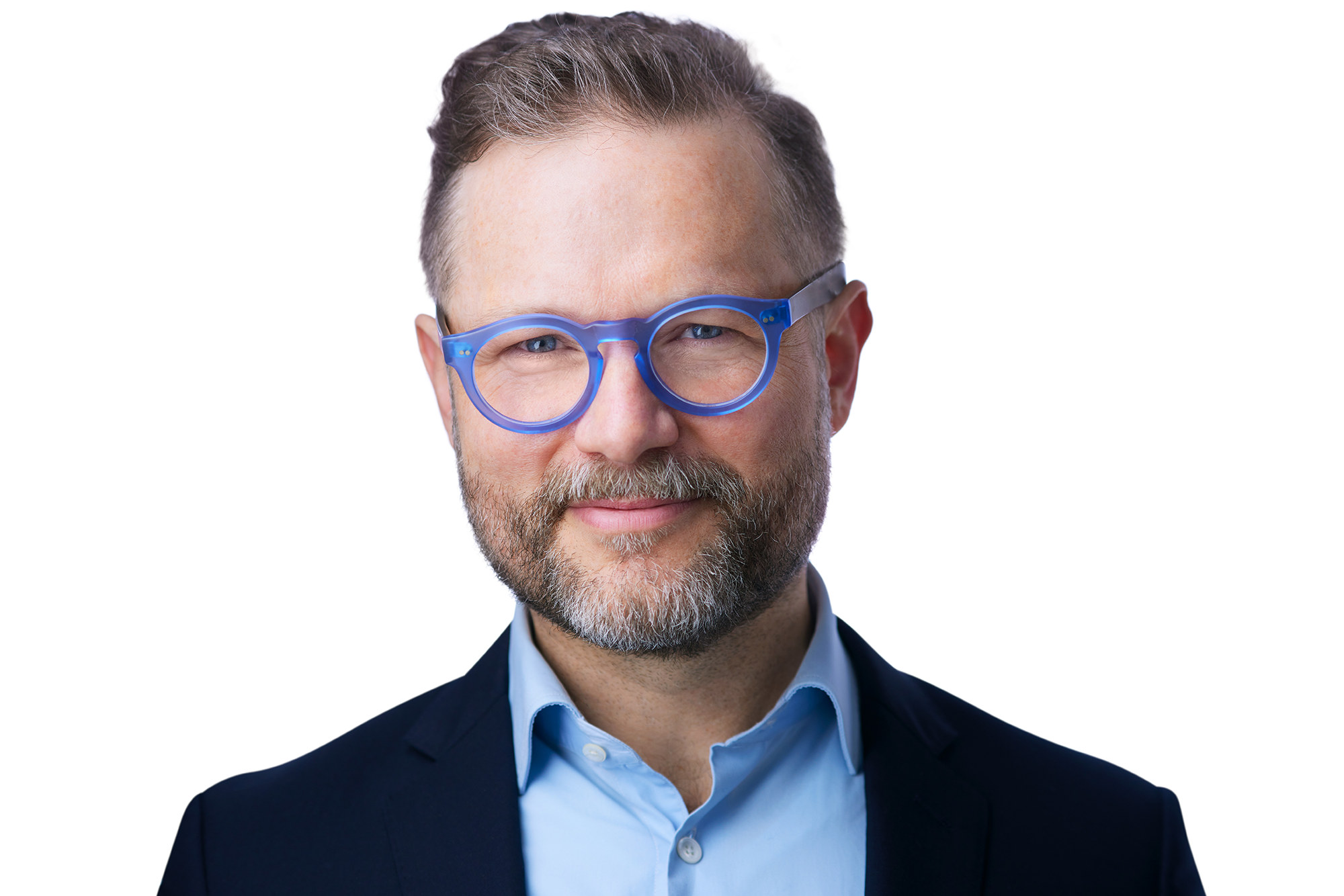
In a young company with big ambitions, John Flannery built the Vantage Risk brand into a force. In 2026, he has been shortlisted for Financial Promoter’s (Re)insurance Marketer of the Year at the US awards….
John Flannery’s role in shaping Vantage Risk is a study in how a company’s identity, narrative and market presence can be built from nothing more than a clear purpose and a blank sheet of paper.
As Chief Marketing and Communications Officer, he has been central to defining what Vantage stands for, how it presents itself to the market and how it communicates its ambition during a period of rapid scale and strategic change.
When Flannery arrived, Vantage was still in its early years. There was no brand to speak of, no marketing strategy and no established narrative.
What he found instead was a green field: a young company with strong leadership, a clear sense of purpose and the freedom to design its identity without the constraints of legacy systems or entrenched politics.
His long‑standing professional relationship with founder Greg Hendrick, dating back to their time at XL in Bermuda, created a foundation of trust that allowed him to move quickly and decisively.
Chapter One of Vantage’s story was about building a brand strong enough to support valuation and attract talent. At the time, the company had around 200 people but a very clear mission: build scale, hire the best and create a business compelling enough to draw in major investors.
Flannery’s work centred on three pillars that became the backbone of the Vantage brand.
The first was talent, recognising that underwriting is a relationship‑driven discipline where reputation matters and where known, respected individuals attract business.
The second was data, reflecting Hendrick’s belief that a modern re/insurer is fundamentally a data analytics company. Starting without legacy systems meant Vantage could design its analytics capabilities from day one, a strength that has only grown more relevant with the rise of artificial intelligence.
The third pillar was creativity and curiosity, essential for a new carrier competing against long‑established incumbents. Without a decades‑old brand to trade on, Vantage needed to articulate clearly what it had built and why it was different.
Visual identity
Flannery’s approach to visual identity was equally deliberate. He and Hendrick worked closely on the creative direction, an unusual level of founder involvement that reflected the importance of getting the brand right.
They wanted something human, approachable and distinct from the sector’s typical corporate palette. The result was a visual system combining illustrative, hand‑drawn elements with data‑inspired motifs, supported by a colour palette uncommon in the industry. Internally, it resonated immediately, helping employees understand and embody the company’s personality.
Marketing at Vantage has always been treated as a relationship‑support function rather than a promotional one. Early in his career, Flannery was told that placing US casualty business required knowing 150 to 200 people.
That insight stayed with him. In a relationship‑driven market, marketing becomes a form of experiential support, creating touchpoints that build trust and reciprocity. His close partnership with Chief Distribution Officer Leanne Barry is a good example. In many organisations, the marketing–distribution relationship can be tense, but at Vantage it has become a source of strength, with Flannery’s work amplifying her visibility and market presence through media, events and targeted communication.
The company’s acquisition, expected to close in the second quarter, marks the beginning of Chapter Two.
With new ownership and permanent capital, Vantage is exploring opportunities to expand its product set, enter new markets and potentially pursue a presence at Lloyd’s, which Flannery sees as a natural next step for a specialty insurer.
Until the full scope of post‑acquisition strategy is defined, his focus remains on ensuring the narrative is clear, consistent and well understood by employees, brokers and the media.
Leaner and meaner
Flannery runs a lean operation: one outsourced team member in the Philippines, a freelance designer, a PR partner and occasional copywriters.
Strategy and planning sit entirely with him. The team prioritises natural inflection points such as renewal cycles and uses email marketing to communicate risk appetite and share broker‑specific success stories.
Thought leadership is another priority, with an emphasis on originality rather than contributing to already saturated topics. Flannery encourages Vantage’s executives to challenge convention, whether in interviews, on LinkedIn or on stage.
His view is that content must be provocative enough to make an audience lean in, not simply repeat what others are saying. For example, while many in the market are focused on data centres, he prefers to discuss the broader infrastructure super‑cycle driven by the AI economy.
Target markets for Vantage include the AI‑driven economy, construction and infrastructure, political risk and credit, casualty and healthcare liability, and specialty reinsurance lines such as aviation, energy and emerging risks. The company is deliberately disciplined in softer markets like cyber and D&O, believing that consistency will pay off when conditions shift.
ROI commitment
Measuring marketing return on investment in a B2B environment with long lead cycles is notoriously difficult.
Flannery has experimented with attribution models, but underwriters often attribute wins to long‑standing relationships rather than marketing influence.
He notes that board‑level conversations about brand are rare in the sector and typically only occur at strategic turning points. For him, the value of marketing lies in the intersection of communication and insight: ensuring that when Vantage leaders speak, whether in print or on stage, they offer something genuinely interesting.
Flannery’s work at Vantage is meaningful because it demonstrates how brand and narrative can accelerate a company’s trajectory when built with clarity and conviction.
He has helped create a business that knows what it stands for, communicates it consistently and competes with far larger incumbents by being sharper, more curious and more human.
His story is ultimately about building trust in a market where trust is everything, and doing so from the ground up.