
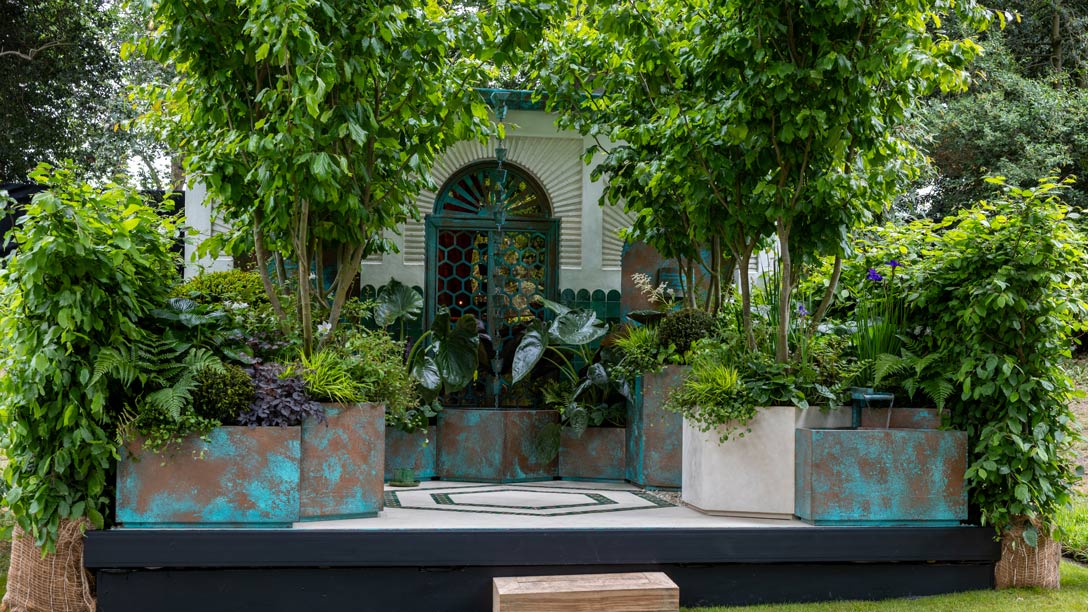
Flood Re has highlighted the role gardens can play in reducing flood risk through its “Contain the Rain” campaign, following the showcase of its feature garden at this year’s Chelsea Flower Show.
At the heart of the campaign was the “Flood Re: Contain the Rain” garden, which demonstrated how planting, permeable materials and integrated water storage can help reduce surface water flooding while creating attractive outdoor spaces.
Kelly Ostler-Coyle, director of corporate affairs at Flood Re, said: “There’s a real risk that households are sleepwalking into a flooding problem without realising it.”
“Our ‘Flood Re: Contain the Rain’ garden shows how the choices we make in our outdoor spaces can either add to the problem or become part of the solution. Hard surfaces send water racing into drains, but greener, more permeable designs help slow, store and absorb it.”
The campaign is supported by research commissioned by Flood Re, which found that awareness of the connection between garden design and flooding remains low.
While more than four in five garden owners believe their outdoor space would cope with heavy rainfall, nearly a third are unaware that paving and other hard surfaces can increase flood risk.
Flood Re said the campaign aims to demonstrate how small changes at household level can collectively help improve community resilience to flooding.
The initiative highlights how gardens can act as part of wider flood management efforts by slowing and storing rainfall before it reaches drainage systems.
Designed by John Howlett, the Chelsea Flower Show garden showcased practical measures homeowners can adopt, including rain gardens, permeable surfaces and planting schemes that improve water absorption.
The campaign forms part of Flood Re’s wider efforts to raise awareness of surface water flooding, one of the UK’s fastest-growing flood risks as climate change drives more intense rainfall events.
Alongside promoting flood insurance affordability, the organisation said encouraging households to understand and reduce flood risk remains a key part of building long-term resilience.